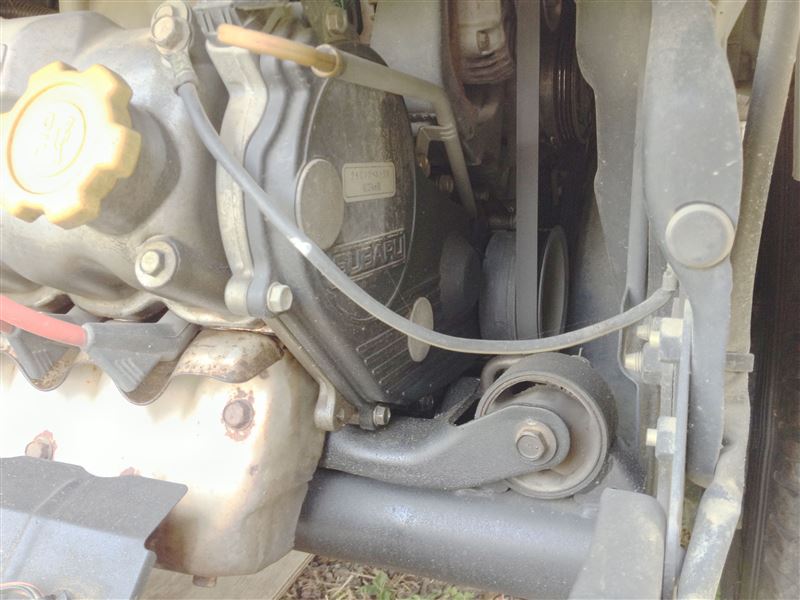
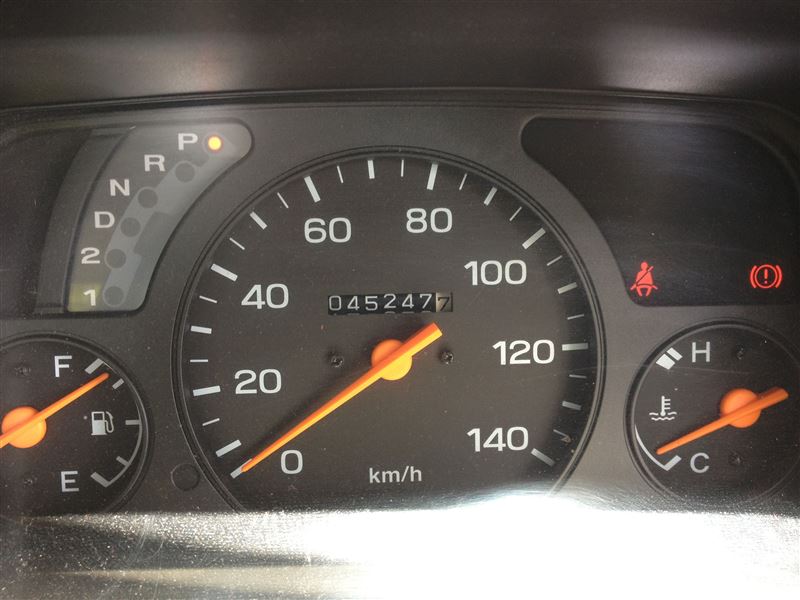
Mileage: 50,185 km
The timing belt is normally replaced after 100,000 km or 10 years.
Although the mileage is still low, the car is well over 10 years old, so I decided to replace it.
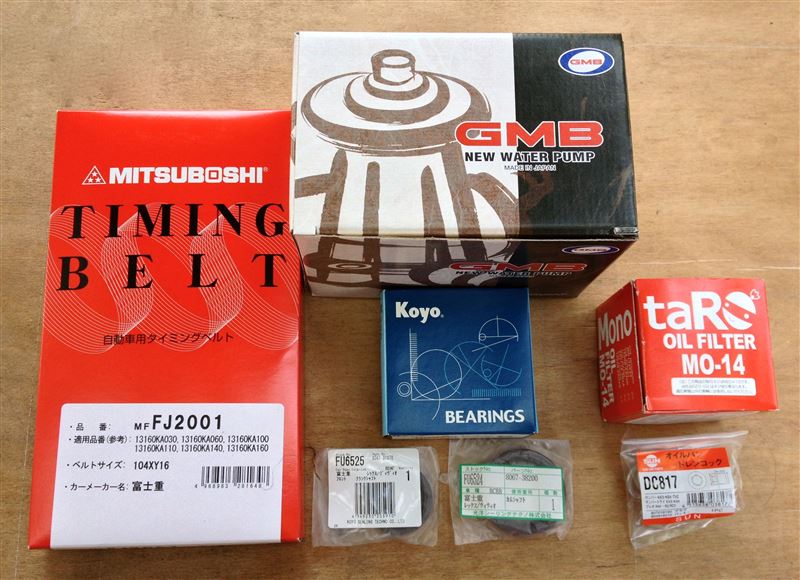
Also, since the engine oil was leaking and was quickly losing oil, I thought it would be a good idea to replace the oil seals and water pump as well.
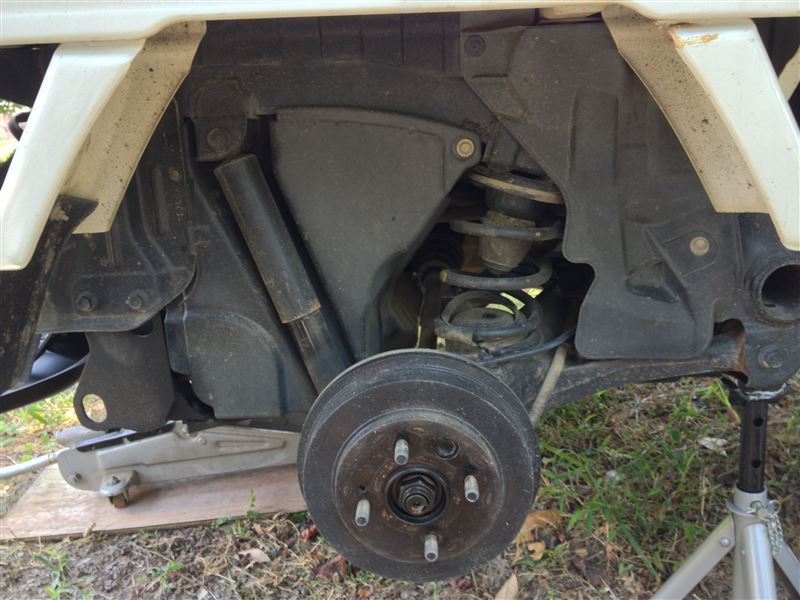
Lift the rear of the vehicle onto the stands and remove the right rear wheel.
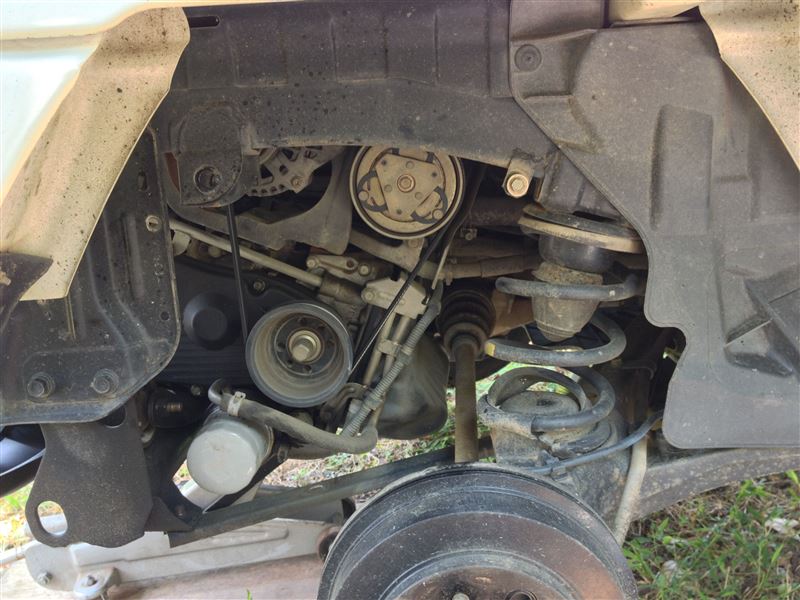
Remove the shock absorber.
Remove the inner cover.
You will now be able to see the belts that turn the alternator and air conditioner compressor.
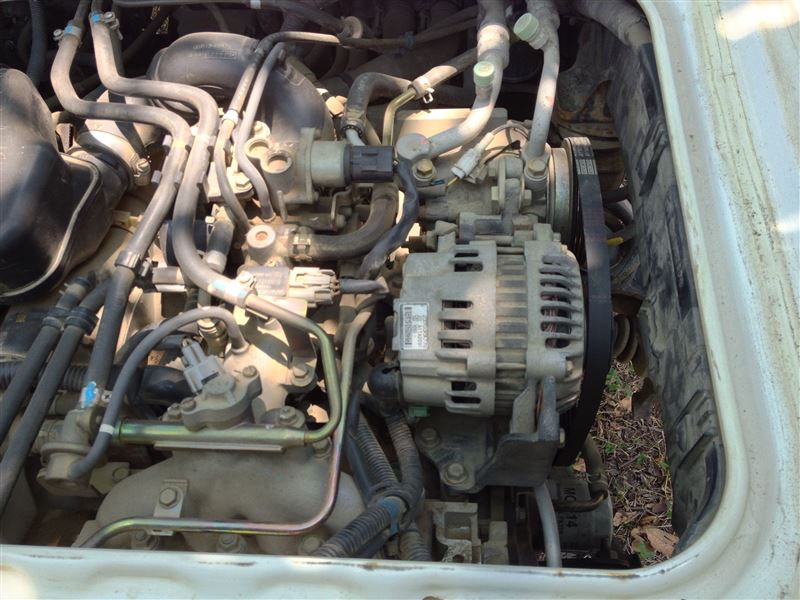
Open the service hole in the cargo bed.
Loosen the alternator mounting bolts, shift the alternator and loosen the belt.
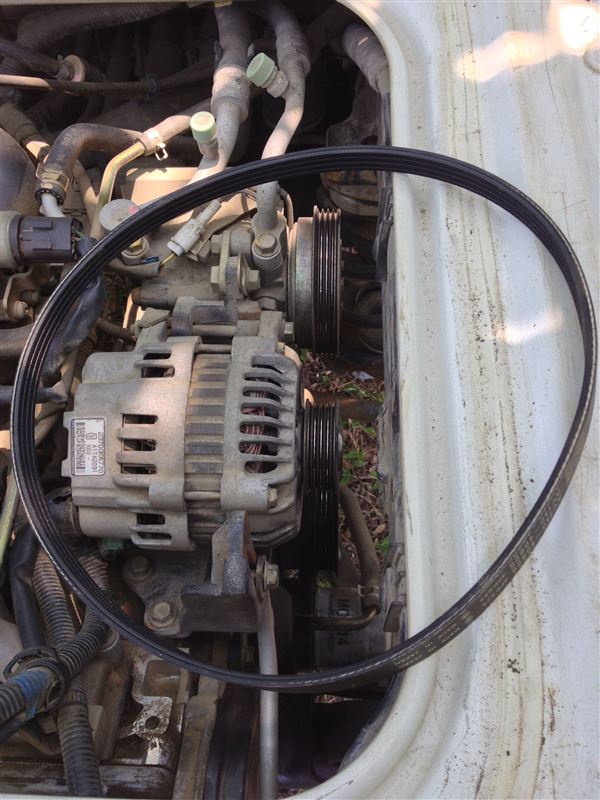
Remove the belt.
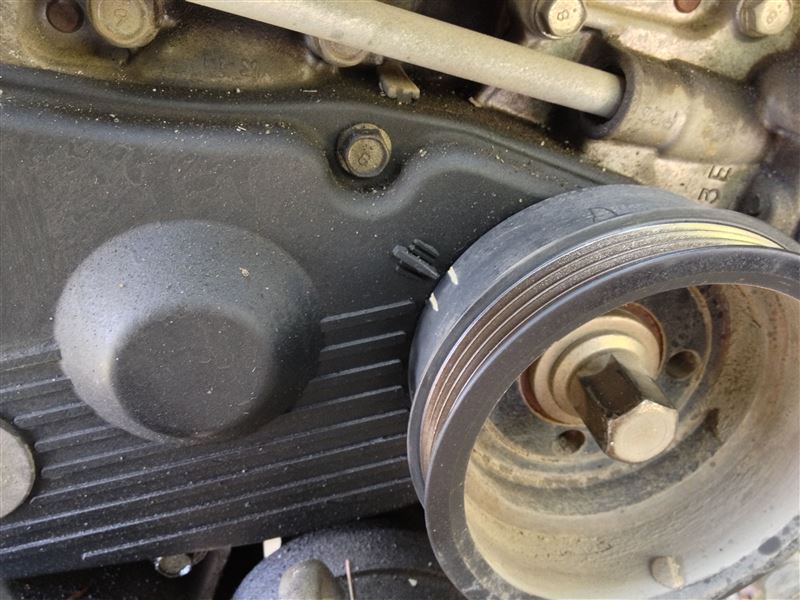
Align the timing marks on the crank pulley.
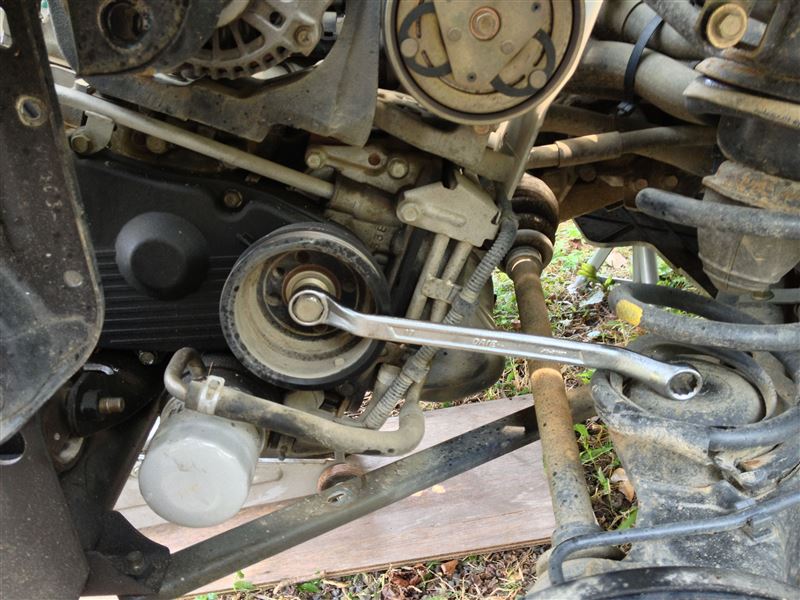
Remove the crank pulley.
It’s tightly tightened, so fit a wrench as shown in the picture, place it against the base of the spring, and turn the starter motor for just a moment to loosen it.
Normally, you’d need a special tool for this, but it’s difficult for a Sunday mechanic to find one, so I used this workaround.
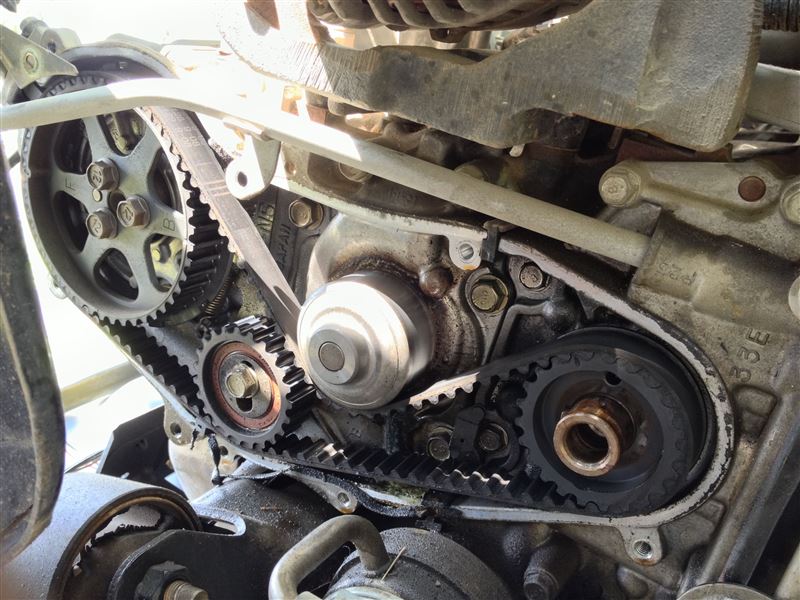
Once the crank pulley mounting bolts are loosened, align the timing marks on the crank pulley again.
Remove the crank pulley mounting bolts.
Remove the crank pulley and the timing belt cover.
The timing belt becomes visible.
There seems to be a water leak from the water pump, but surprisingly there doesn’t seem to be an oil leak.
I have already purchased oil seals and other parts, so I decided to replace them all just to be safe.
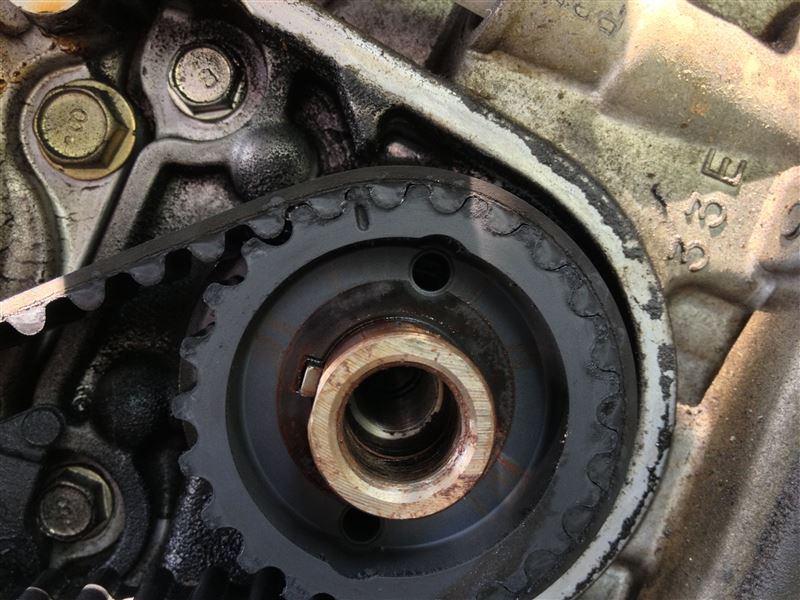
To turn the crankshaft, reinstall the pulley bolt you just removed and turn it with a wrench.
Align the alignment marks on the crankshaft.
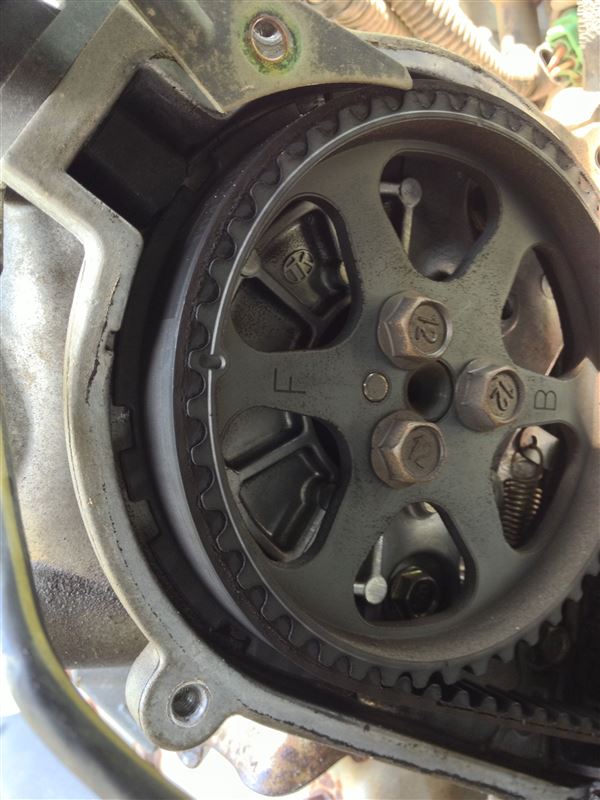
Also align the alignment marks on the camshaft.
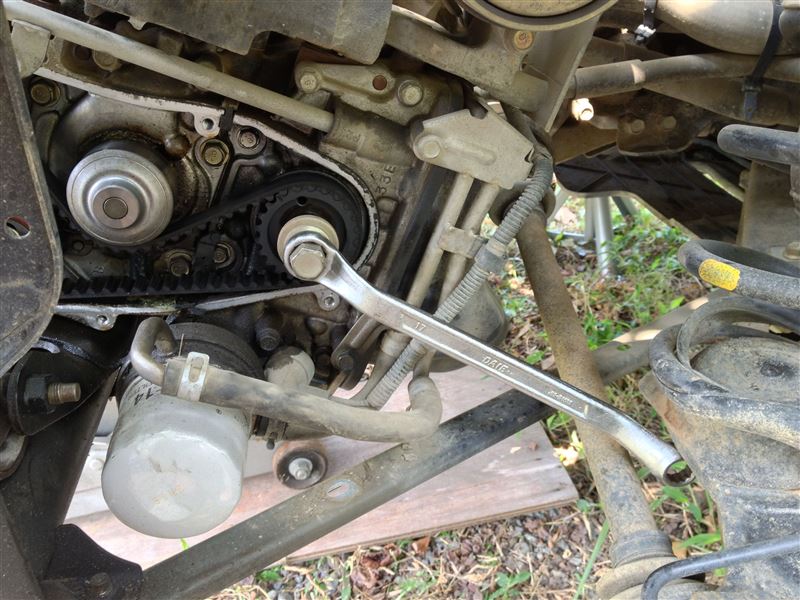
Attach a wrench as shown in the photo to prevent rotation and to prevent the alignment marks from shifting.
The wrench on the pulley bolt is hooked onto the base of the spring, so it will prevent rotation when you loosen the cam sprocket mounting screws.
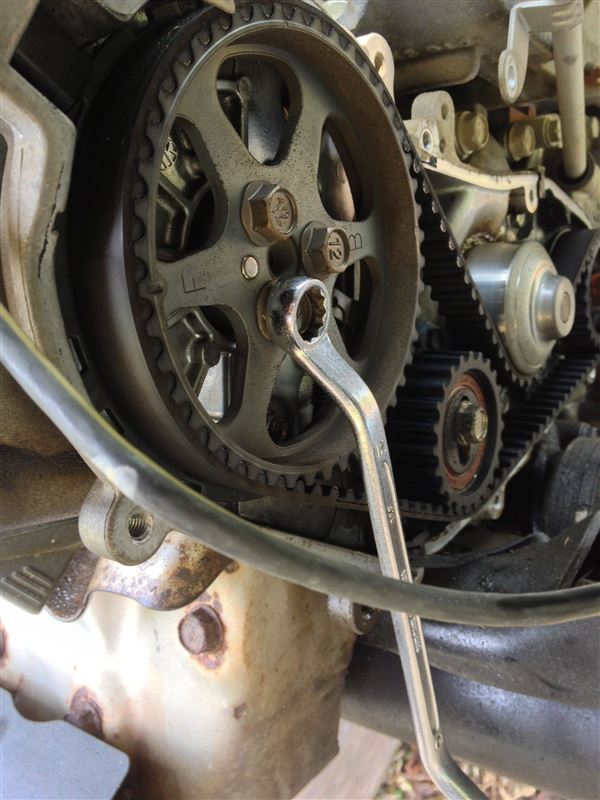
Loosen the cam sprocket mounting screws.
If the alignment marks are misaligned, realign them.
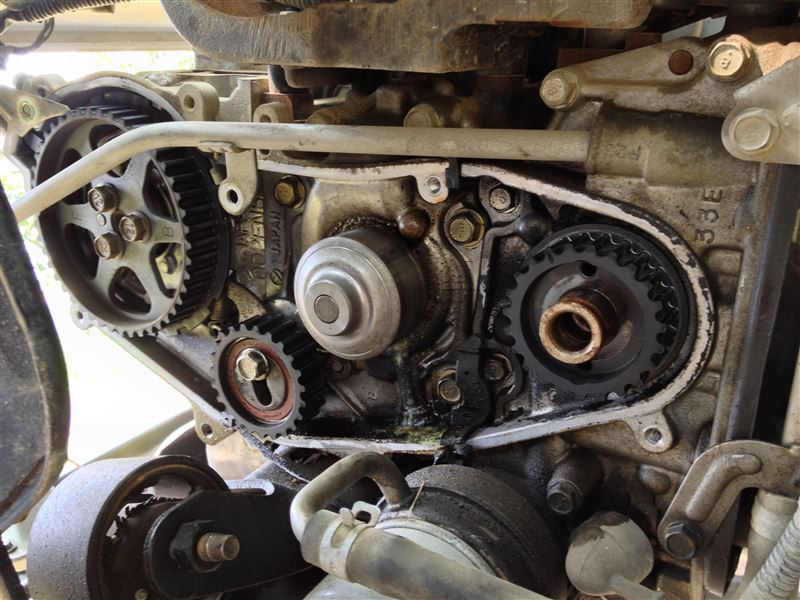
Make sure the alignment marks are in the correct position before removing the timing belt.
The replacement belt should have a mark on it indicating the alignment mark position, but if there is no mark, it is a good idea to mark it before removing the belt and then transfer the mark position onto the new belt.
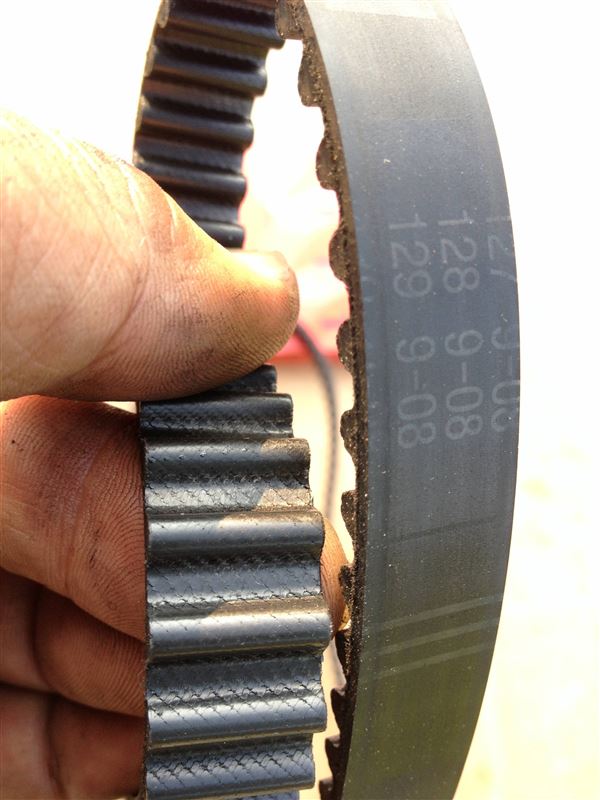
This is the condition of the old timing belt that was removed.
It still looks usable, but since we’ve come this far, we’ll replace it.
It’s past the replacement date though…
To be continued
Comments